Mishmi Hills Birding Trip – November 2024
A four-day birding journey through the grasslands of Lower Dibang Valley and the mountain forests of the Mishmi Hills, exploring Roing, Tiwari Village and Mayodia Pass.
From Lower Dibang Valley to the Mishmi Hills
In November 2024, I travelled with a small group of four participants for a birding journey through the Mishmi Hills and Lower Dibang Valley of Arunachal Pradesh.
We stayed around Roing before moving higher into the Mishmi Hills, with our birding covering the grasslands of Lower Dibang Valley, Tiwari Village and the forests around Mayodia Pass.
The journey took us through a remarkable change in elevation and habitat. From the lower valley, the road climbs steadily into the Mishmi Hills before reaching Mayodia Pass at around 2,655 metres (8,700 feet).
Our birding style was equally varied. We spent time walking through grasslands and forest trails, while in the mountains much of our birding was along the roadside—driving slowly, stopping when we found bird activity and exploring productive stretches on foot.
Over four days, we recorded 58 bird species across six eBird checklists.
Birding the Grasslands of Lower Dibang Valley
We began in the lower elevations around Roing and the grasslands of Lower Dibang Valley.
Birding these open habitats requires a very different approach from the forests higher in the hills. We spent time walking and scanning the grasslands, watching the vegetation carefully and listening for birds that could easily remain hidden.

Tiwari Village and the surrounding lower-elevation habitats formed an important part of this section of the journey before we began climbing into the mountains.
What makes this route particularly interesting is how quickly the landscape changes. Within a relatively short journey, we could move from open grassland and foothill habitats into dense mountain forest, bringing an entirely different group of birds into consideration.
Climbing Towards Mayodia
As we left the lower valley and climbed towards Mayodia, our birding increasingly became a combination of roadside stops and walking through forest trails.
This is a style of birding I particularly enjoy in the mountains.
There can be long quiet stretches where very little seems to be happening. Then we hear a call or notice movement in the canopy, stop the vehicle and suddenly find ourselves in the middle of an active feeding flock.
Among the birds recorded during the journey were Darjeeling Woodpecker, Gray-chinned Minivet, White-browed Shrike-Babbler, Black-eared Shrike-Babbler and Yellow-bellied Fairy-Fantail.
Birding the High Forests of Mayodia
At around 2,655 metres, Mayodia Pass brought us into a completely different environment from the grasslands where our journey had started.
We stayed in an eco-lodge around Mayodia, which allowed us to remain close to the high-elevation birding areas and make the most of our time in the mountains.
The forests here produced an excellent variety of smaller Himalayan birds.
We recorded Ashy-throated Warbler, White-spectacled Warbler, Gray-cheeked Warbler, Blyth’s Leaf Warbler, Chestnut-headed Tesia and Black-faced Warbler.
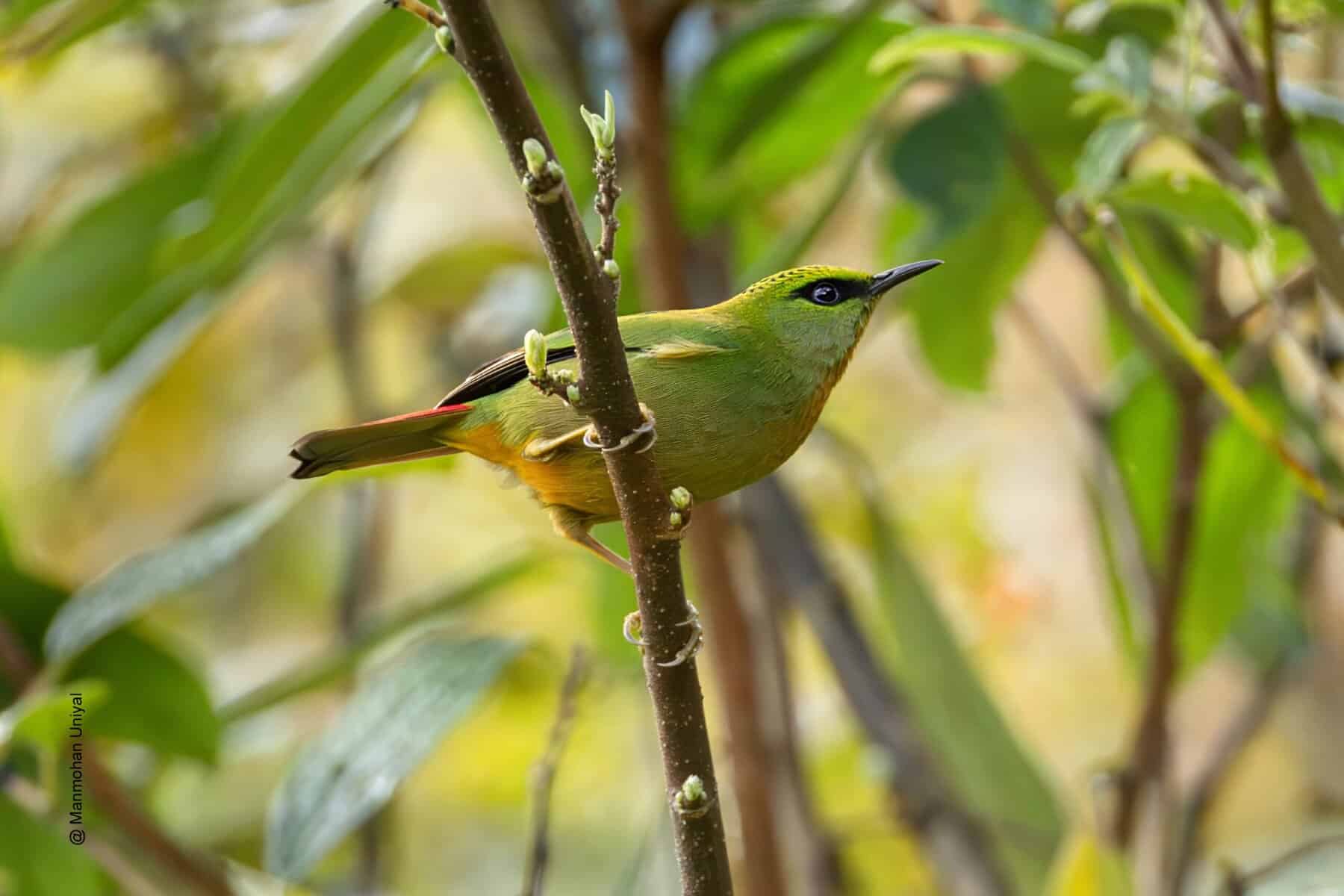
Fire-tailed Myzornis was another memorable bird from the journey. The same forests also produced Brown-throated Fulvetta, Manipur Fulvetta, Whiskered Yuhina and White-naped Yuhina.
This change in birdlife as we climbed higher was one of the most interesting aspects of the trip.
Specialities of the Mishmi Hills
Of course, when birding in the Mishmi Hills, some species carry particular significance.
We recorded the Mishmi Wren-Babbler, along with Golden Babbler, Rufous-capped Babbler and Slender-billed Scimitar-Babbler.
Another important bird was the Cachar Wedge-billed Babbler, with three individuals recorded during the journey.

The checklist also included Black-breasted Parrotbill, Yellow-throated Fulvetta, Rufous-winged Fulvetta and Striated Laughingthrush.
These birds are also a good example of why field knowledge matters in this landscape. Simply driving through the mountains is not enough. Knowing which elevations and habitats to spend time in—and when to leave the vehicle and work a stretch of forest slowly—can make a considerable difference.
Mixed Flocks in the Mountain Forest
Mixed feeding flocks gave us some of the most enjoyable periods of birding during the journey.
The forests produced Long-tailed Sibia, Beautiful Sibia, Blue-winged Minla, Chestnut-tailed Minla, Rusty-fronted Barwing, Silver-eared Mesia and Red-tailed Minla.
This is one of the pleasures of birding in Himalayan forests. A seemingly quiet stretch of road can suddenly become very active as a flock moves through different levels of the vegetation.

We also recorded White-tailed Nuthatch and Chinese Rubythroat, while Daurian Redstart, Fire-breasted Flowerpecker, Green-tailed Sunbird and Streaked Spiderhunter added further variety.
Four Days Across Different Elevations
For me, the most memorable aspect of this Mishmi Hills birding trip was the transition through different habitats.
We began among the grasslands of Lower Dibang Valley, explored around Roing and Tiwari Village, and then climbed into the cool mountain forests surrounding Mayodia Pass.
The birdlife changed with us.
It is also a landscape where covering kilometres is less important than knowing where to spend time. In the mountains, we often drove slowly until we found activity and then explored that section on foot. In the grasslands, the approach changed again, with more time spent walking, listening and scanning the vegetation.
Although this was only a four-day journey, it gave us a very good introduction to the diversity of birdlife found across this part of Arunachal Pradesh.
Complete Bird Checklist
During our four-day Mishmi Hills birding trip, we recorded 58 bird species across six eBird checklists.
Highlights included Mishmi Wren-Babbler, Cachar Wedge-billed Babbler, Black-breasted Parrotbill, Fire-tailed Myzornis, Manipur Fulvetta, Darjeeling Woodpecker, Black-eared Shrike-Babbler and Chinese Rubythroat.
For the complete species list, counts and individual observations from the journey:
View Complete eBird Trip Report →
Journey Summary
Tour Dates: 5–8 November 2024
Duration: 4 Days
Group Size: 4 participants
Region: Lower Dibang Valley & Mishmi Hills, Arunachal Pradesh
Areas Explored: Roing, Lower Dibang Valley grasslands, Tiwari Village and Mayodia Pass
Highest Area: Mayodia Pass – approximately 2,655 m / 8,700 ft
Birding Style: Grassland walks, roadside birding and forest trails
Stay: Eco-lodges in Roing and Mayodia
Habitats Covered: Grasslands, foothill habitats and high-elevation mountain forests
Key Highlights: Mishmi Wren-Babbler, Cachar Wedge-billed Babbler, Black-breasted Parrotbill, Fire-tailed Myzornis, Manipur Fulvetta, Darjeeling Woodpecker and Chinese Rubythroat
Expedition Led By: Manmohan Uniyal
Explore the Mishmi Hills
The Mishmi Hills offer a fascinating birding journey from the grasslands of Lower Dibang Valley to the high forests around Mayodia Pass. Different elevations and habitats can be combined according to the season and the birds a traveller hopes to see.