Manas Birding Tour in 30 Seconds

BEST BIRDING SEASON
November–April

NEAREST RAILWAY STATION
Barpeta Road (BPRD)

NEAREST AIRPORT
Guwahati Airport (GAU)

IDEAL STAY
4–5 Days

SUITABLE FOR
Bird Watching & Photography

GROUP TOUR STARTING FROM
₹45,500 per person

+5% GST | Twin sharing

BIRDING STYLE
Jeep safaris, grasslands and forests

COMBINE WITH
Kaziranga, Nameri and Eaglenest

WHY CHOOSE A MANAS NATIONAL PARK BIRDING TOUR?

Manas combines tropical forests, grasslands, wetlands and riverine habitats in the Eastern Himalayan foothills. These varied landscapes support Bengal Florican, hornbills, broadbills, kingfishers and raptors. Birding is combined with opportunities to encounter elephants, rhinoceroses, wild buffalo and other mammals. Travellers interested in the wider safari experience can explore our Manas National Park wildlife safari.

  • Diverse forest, grassland and river habitats
  • Bengal Florican and sought-after hornbills
  • Birdwatching and photography from safari routes
  • Excellent combination of birds and mammals
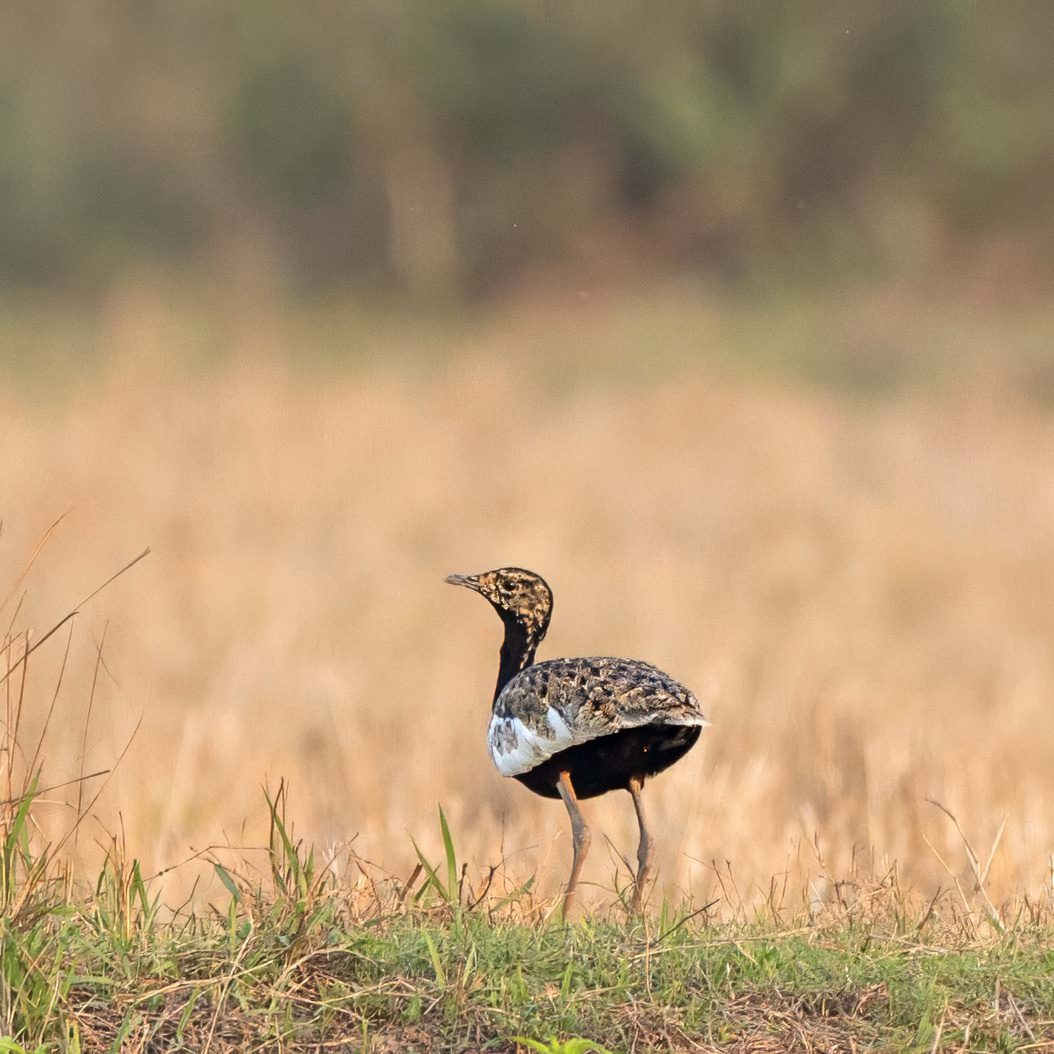
Bengal Florican in Manas National Park

Featured Birds

Discover the grassland specialists, hornbills, broadbills and raptors that make Manas National Park one of Assam’s most rewarding birding destinations.
Bengal Florican in Manas National Park

Bengal Florican

Houbaropsis bengalensis

Resident

Hornbill at Jim Corbett Tiger Reserve

Great Hornbill

Buceros bicornis

Resident

Rufous necked Hornbill in Latpanchar by World of Wild (WOW)

Rufous-necked Hornbill

Aceros nipalensis

Resident

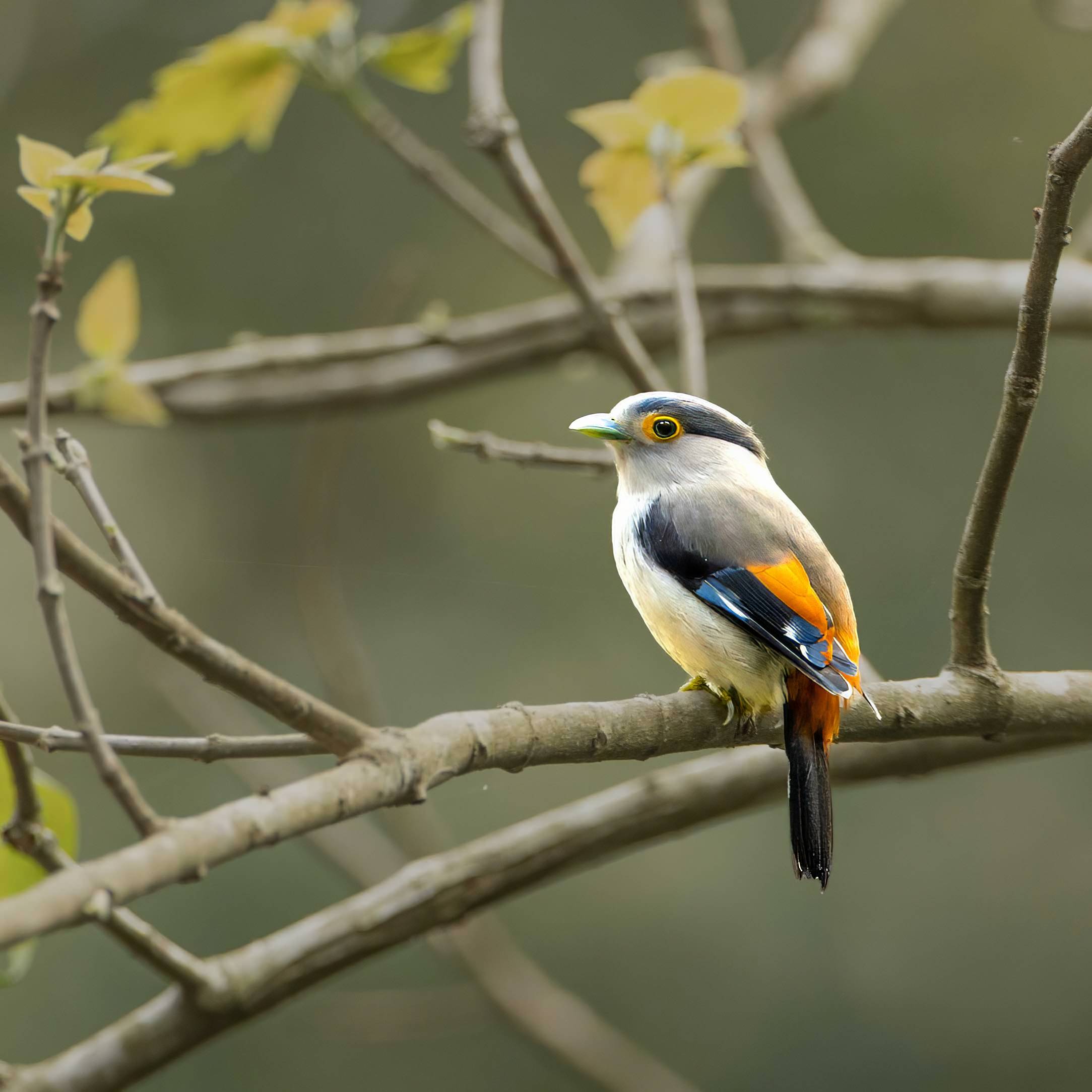
Silver-breasted Broadbill-Manas-National-Park

Silver-breasted Broadbill

Serilophus lunatus

Resident

Black-breasted Parrotbill in the lower-elevation habitat around Roing

Black-breasted Parrotbill

Paradoxornis flavirostris

Resident

Sultan Tit in Manas National Park Birding Tour

Sultan Tit

Melanochlora sultanea

Resident

Alert Collared Falconet resting on a perch

Collared Falconet

Microhierax caerulescens

Resident

Pied Harrier

Pied Harrier

Circus melanoleucos

Winter Visitor

Important Birds Recorded around Manas

Explore the resident birds, seasonal visitors, raptors, owls and sought-after species that make Manas National Park a rewarding birding destination
Bengal Florican Houbaropsis bengalensis
Kalij Pheasant Lophura leucomelanos
Red Junglefowl Gallus gallus
Indian Peafowl Pavo cristatus
Great Hornbill Buceros bicornis
Oriental Pied-Hornbill Anthracoceros albirostris
Blue-bearded Bee-eater Nyctyornis athertoni
Stork-billed Kingfisher Pelargopsis capensis
Crested Serpent-Eagle Spilornis cheela
Changeable Hawk-Eagle Nisaetus cirrhatus
Asian Fairy-bluebird Irena puella
White-rumped Shama Copsychus malabaricus
Great Hornbill Buceros bicornis
Oriental Pied-Hornbill Anthracoceros albirostris
Stork-billed Kingfisher Pelargopsis capensis
Collared Falconet Microhierax caerulescens
Northern Lapwing Vanellus vanellus
Bengal Florican Houbaropsis bengalensis
Pied Harrier Circus melanoleucos
Short-eared Owl Asio flammeus
Oriental Scops-Owl Otus sunia
Spot-bellied Eagle-Owl Ketupa nipalensis
Slender-billed Babbler Argya longirostris
Sultan Tit Melanochlora sultanea
Western Hooded Pitta Pitta sordida
Ruddy Kingfisher Halcyon coromanda
Finn’s Weaver Ploceus megarhynchus
Gray-lored Broadbill Serilophus rubropygius
Long-tailed Broadbill Psarisomus dalhousiae
Dollarbird Eurystomus orientalis
Indian Cuckoo Cuculus micropterus
Chestnut-headed Bee-eater Merops leschenaulti
Black Francolin Francolinus francolinus
Bengal Florican Houbaropsis bengalensis
Rosy Minivet Pericrocotus roseus
Golden-headed Cisticola Cisticola exilis
Spot-bellied Eagle-Owl Ketupa nipalensis
Oriental Honey-buzzard Pernis ptilorhynchus
Short-eared Owl Asio flammeus
Himalayan Griffon Gyps himalayensis
Oriental Scops-Owl Otus sunia
Steppe Eagle Aquila nipalensis
Asian Barred Owlet Glaucidium cuculoides
Crested Serpent-Eagle Spilornis cheela
Collared Scops-Owl Otus lettia
Changeable Hawk-Eagle Nisaetus cirrhatus
Pied Harrier Circus melanoleucos
Collared Falconet Microhierax caerulescens
Finn’s Weaver Ploceus megarhynchus
Slender-billed Babbler Argya longirostris
Great Hornbill Buceros bicornis
Western Hooded Pitta Pitta sordida
Collared Falconet Microhierax caerulescens
Gray-lored Broadbill Serilophus rubropygius
Bengal Florican Houbaropsis bengalensis
Spot-bellied Eagle-Owl Ketupa nipalensis
Ruddy Kingfisher Halcyon coromanda
Sultan Tit Melanochlora sultanea
Long-tailed Broadbill Psarisomus dalhousiae
Asian Fairy-bluebird Irena puella

MANAS THROUGH THE SEASONS

 
OCT – NOV
Resident birds become active after the monsoon, while the first winter visitors begin arriving.
 
DEC – FEB
Excellent for Bengal Florican, hornbills, winter visitors, raptors and several sought-after owls.
 
MAR – MAY
Warm breeding season for pittas, cuckoos, broadbills, kingfishers and the rare Finn’s Weaver.
 
JUN – SEP
Heavy monsoon rain restricts birding access, and the national park normally remains closed.
Expert birding guide leading international birders during a Himalayan birding tour in India.

FIXED GROUP DEPARTURES AND PRIVATE BIRDING TOURS

Choose How You Want to Plan Your Manas Birding Tour

Join our Fixed Departure Group Tours with like-minded birding enthusiasts or plan a Private Manas National Park Birding Tour around your dates and target species. Every journey is designed for travellers who want to understand and experience Manas beyond individual bird sightings.

FIXED GROUP DEPARTURE

For a Group of 4

4 Nights / 5 Days

₹45,500 per person + 5% GST
Twin-sharing basis

UPCOMING DEPARTURES

PRIVATE BIRDING TOUR

Custom Dates

Price on Request
Twin-sharing basis

IDEAL FOR

IN-DEPTH PRIVATE TOUR

6 Nights / 7 Days

Price on Request
Twin-sharing basis

IDEAL FOR

  Trusted by 1,000+ Wildlife and Birding Travellers   |   4.9/5 Rating on Google ⭐⭐⭐⭐⭐

EXPLORE BEYOND MANAS

GUEST REVIEWS

PLAN YOUR MANAS BIRDING TOUR

How do I reach Manas National Park?

By Air
Guwahati Airport is around 140 km from Manas National Park, with a drive of approximately 4–5 hours.
By Train
Barpeta Road Railway Station is approximately 22–40 km from the main lodges and entry points of Manas, depending on where you stay.
Transfers
Private transfers from Guwahati Airport or Barpeta Road Railway Station to Manas National Park can be included in your tour.
Environmental Shot for Birding in India

RECENT TRIP REPORTS

MOMENTS CAPTURED ON MANAS BIRDING TOURS

FREQUENTLY ASKED QUESTIONS ABOUT MANAS BIRDING TOURS

Manas is famous for its combination of alluvial grasslands, tropical forests, wetlands and riverine habitats in the Eastern Himalayan foothills. This UNESCO-listed landscape supports Bengal Florican, hornbills, pittas, broadbills, raptors and owls. It is an important destination within our wider collection of birding tours in India.

November to February offers comfortable weather, winter visitors, raptors, owls and productive grassland birding. March to May is warmer but rewarding for breeding activity, pittas, cuckoos, broadbills and kingfishers. Tourism access is most reliable between November and April, while activities may close progressively as the monsoon approaches.

Late February to April is generally the strongest period for observing male Bengal Florican activity and courtship displays. We recorded the species during both our February 2025 and May 2024 visits, although sightings and displays are never guaranteed. Conservation research from Manas also documents surveys conducted from February to April.

The principal highlight is Bengal Florican. Other important birds include Finn’s Weaver, Great Hornbill, Western Hooded Pitta, Ruddy Kingfisher, Gray-lored Broadbill, Long-tailed Broadbill, Slender-billed Babbler, Collared Falconet, Sultan Tit and Spot-bellied Eagle-Owl. These selections are supported by our May 2024 and February 2025 field reports.

A four-to-five-day Manas National Park birding tour is recommended. This allows multiple morning and afternoon sessions across grasslands, forests and riverine habitats. Serious birdwatchers and photographers searching for Bengal Florican, owls, pittas and other specialised birds may benefit from staying longer.

Manas has three principal ranges: Panbari in the west, Bansbari in the centre and Bhuyanpara in the east. Grasslands support Bengal Florican, harriers and grassland birds, while forests hold hornbills, pittas, broadbills and mixed feeding flocks. Most birding is conducted from safari vehicles, forest roads and accessible areas around lodges.

Manas is not currently known for established commercial bird-photography hides comparable to those in Sattal. Photography is primarily conducted from safari vehicles, forest edges, grasslands and areas around lodges. A flexible telephoto zoom is particularly useful. Travellers interested in dedicated photography experiences can also explore our bird-photography tours.

Manas supports Greater One-horned Rhinoceros, Asian Elephant, Wild Water Buffalo, Gaur, Golden Langur, Capped Langur, Hog Deer, Sambar and Wild Boar. Tigers, Pygmy Hogs, Clouded Leopards and Hispid Hares also occur but are difficult to encounter. Explore our dedicated Manas National Park wildlife safari for the park’s mammals and safari experience.

Guwahati Airport is the nearest major airport, approximately 140 km from Manas, with a road transfer of around four to five hours. Barpeta Road Railway Station is the closest practical railhead, approximately one hour away. Private transfers from the airport or railway station can be included in the tour.

Foreign nationals need a valid passport and Indian visa, along with the applicable park-entry and safari permits. Foreign visitor and camera fees may differ from Indian rates. Assam does not require an Inner Line Permit, but one is needed if the journey continues into Arunachal Pradesh. Use only the official Indian visa portal and official Manas booking portal.

Manas is remote and does not offer conventional five-star accommodation. Available options are mainly eco-camps and nature lodges around the park. Selected stays provide clean and hygienic rooms, comfortable beds and good freshly prepared food. Electricity, hot water, internet and mobile connectivity may be less consistent than in major cities.

Manas can be combined with Kaziranga National Park for rhinoceroses, grassland wildlife and wetland birds; Nameri for forest and river birding; Eaglenest for higher-elevation Eastern Himalayan species; or Deepor Beel for wetland birding near Guwahati. International travellers can also explore our wider birding and wildlife tours in India.

Ready to Plan Your Manas Birding Tour?

Tell us your dates, group size and interests, and we will help you plan the tour.