RAJAJI
NATIONAL PARK
Wildlife Safaris and Photography in the Shivalik Foothills
Rajaji IN 30 SECONDS
BEST TIME
November–June
IDEAL STAY
3 - 4 Nights
TOUR STARTS FROM
₹27,000 per person
+5% GST | Twin sharing
NEAREST AIRPORT
Dehradun (DED)
50 km | 1.15 hrs
BEST FOR
Photography & Wildlife
SAFARI
Open Jeep Safari
WILDLIFE HIGHLIGHTS
Leopards & Birds
POPULAR ADD-ONS
Rishikesh, Kanatal, Mandal and Chopta
WHY VISIT RAJAJI?
Rajaji National Park is one of North India’s most rewarding destinations for leopard and elephant safaris. Its combination of sal forests, dry riverbeds, grasslands and forested Shivalik hills creates an exceptionally beautiful setting for wildlife watching and photography.
Mohand is particularly rewarding for leopard-focused safaris, while Chilla and Motichur offer contrasting habitats and excellent opportunities to observe Asian elephants, deer, birds and other wildlife. Morning and evening open-jeep safaris allow travellers to explore these different landscapes with experienced local guides.
Rajaji is also remarkably accessible. Dehradun Airport and railway station are nearby, while the Delhi–Dehradun Expressway makes the park convenient for travellers arriving from Delhi. Comfortable homestays and nature retreats are available around the different safari ranges. More information about the reserve and its protected landscape is available through the official Rajaji National Park website.

What to See in Rajaji National Park

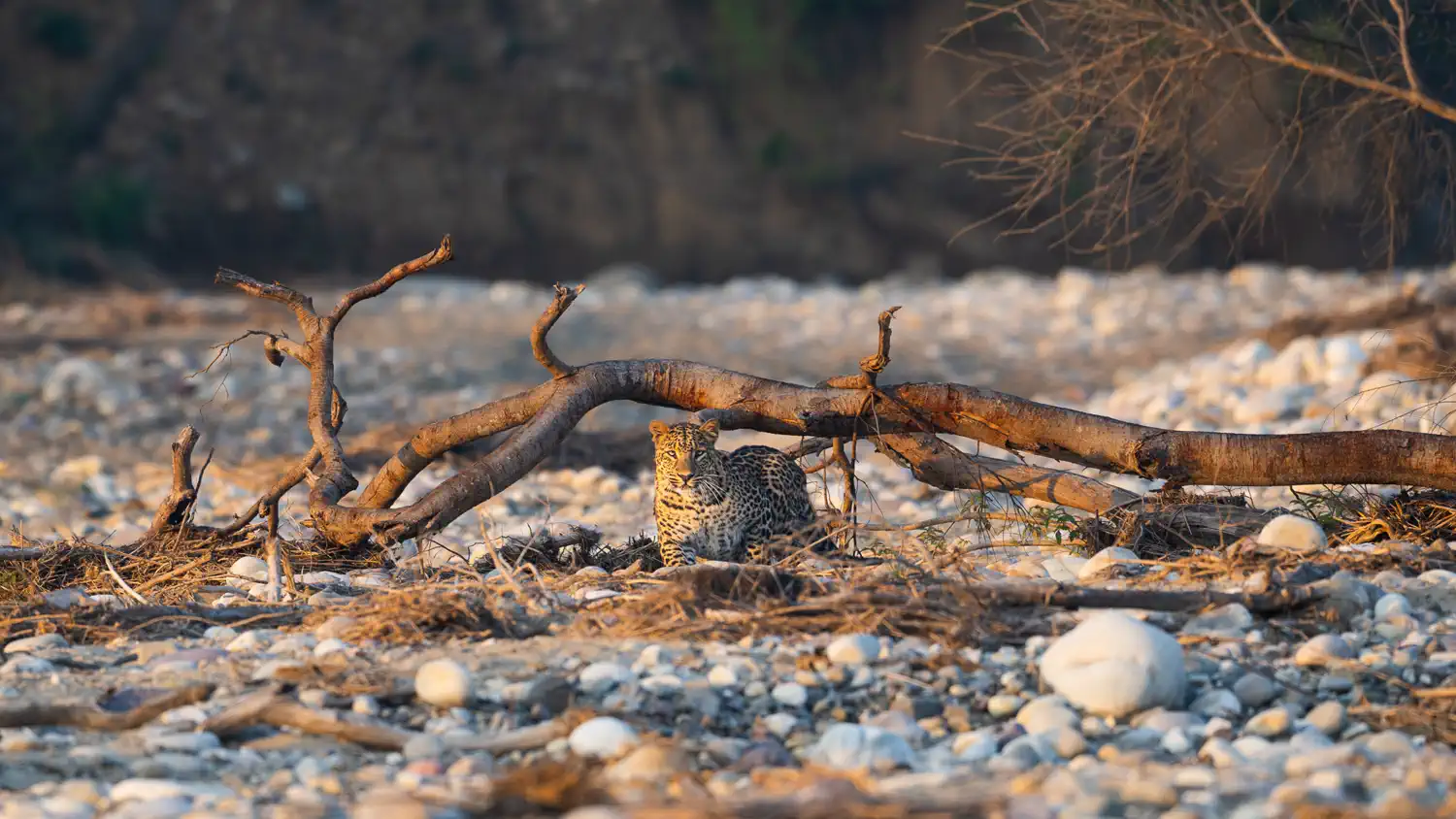
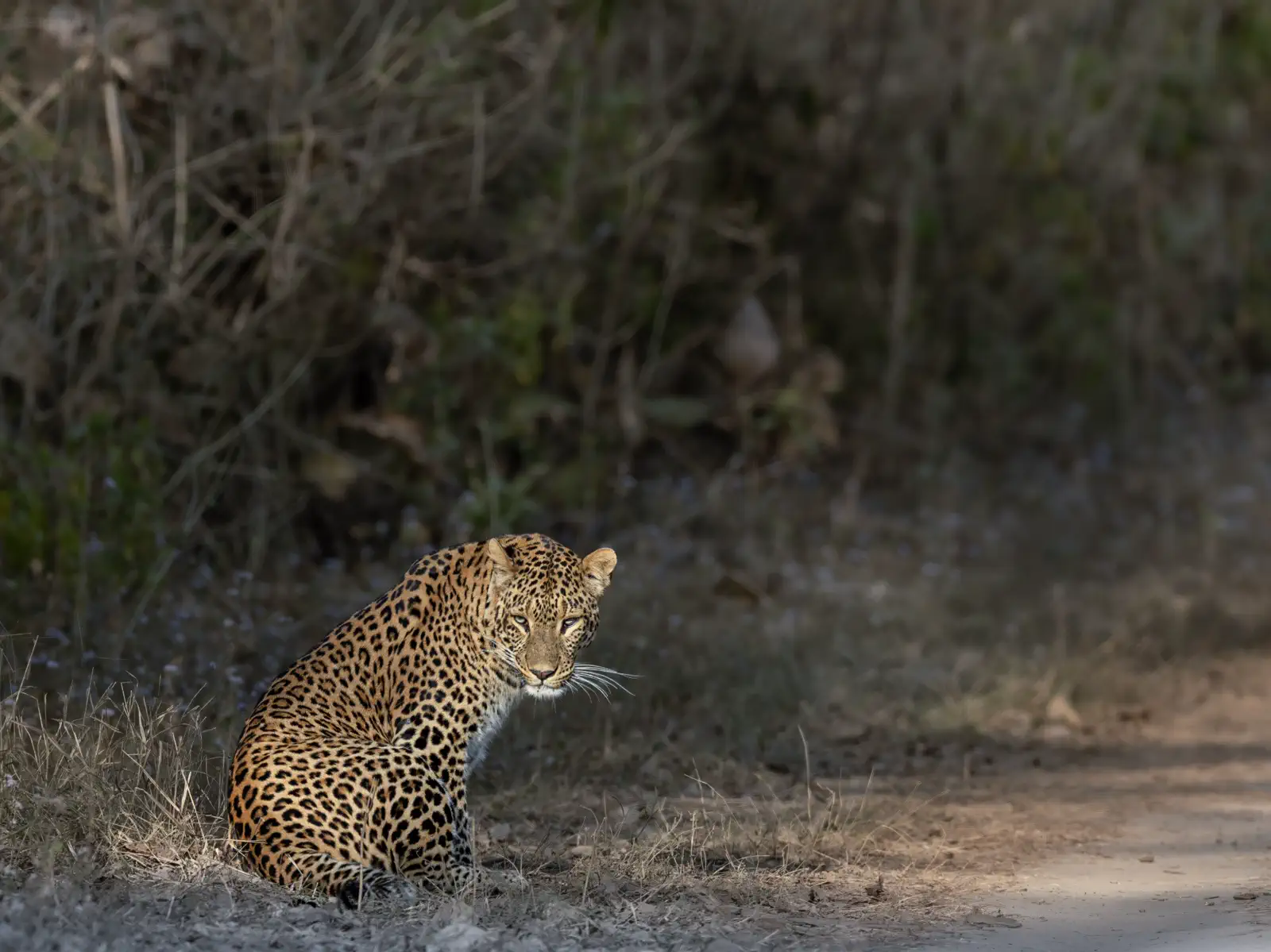
LEOPARDS
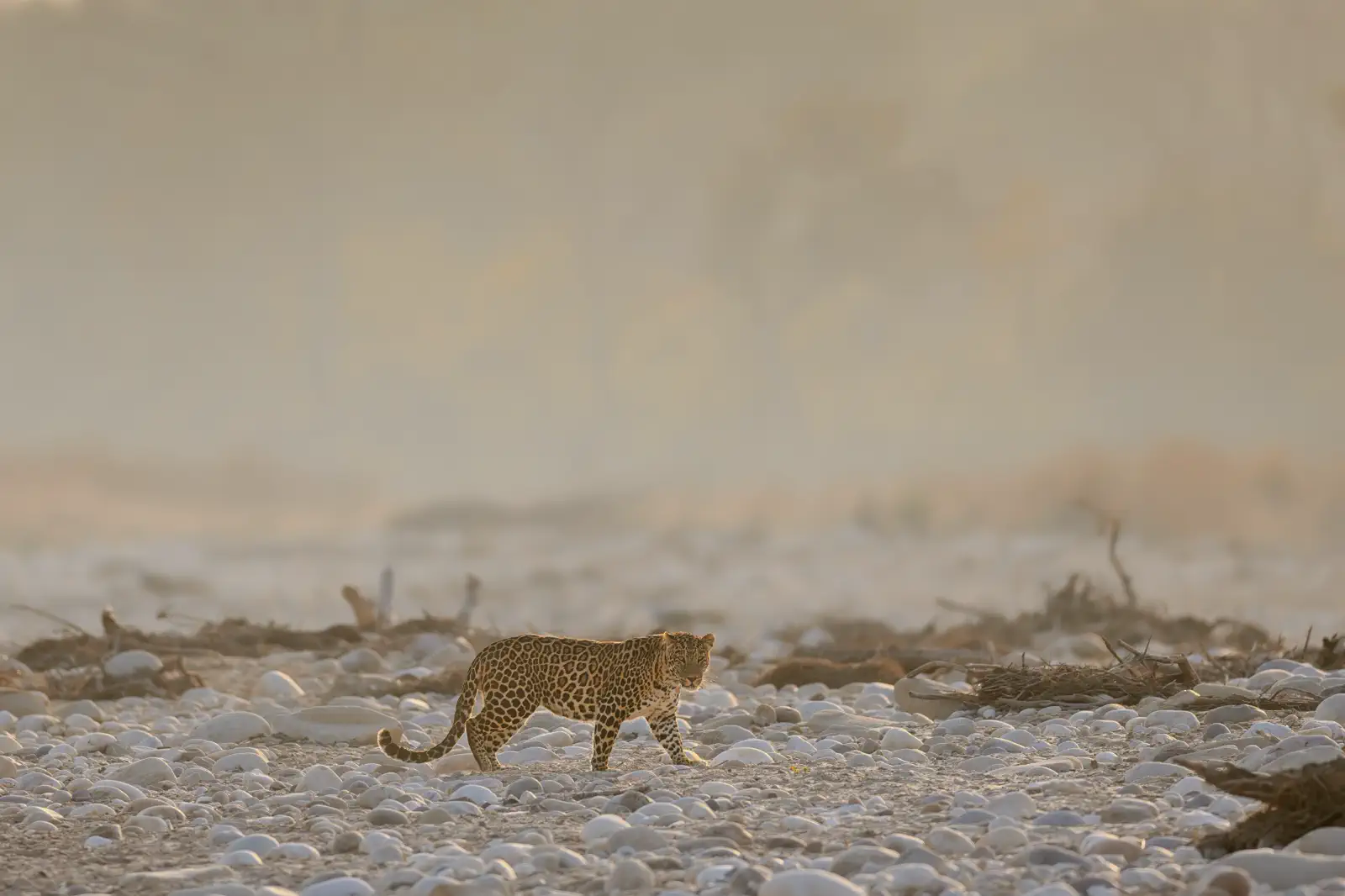
Observe and photograph leopards across forest tracks and rugged Shivalik habitats.

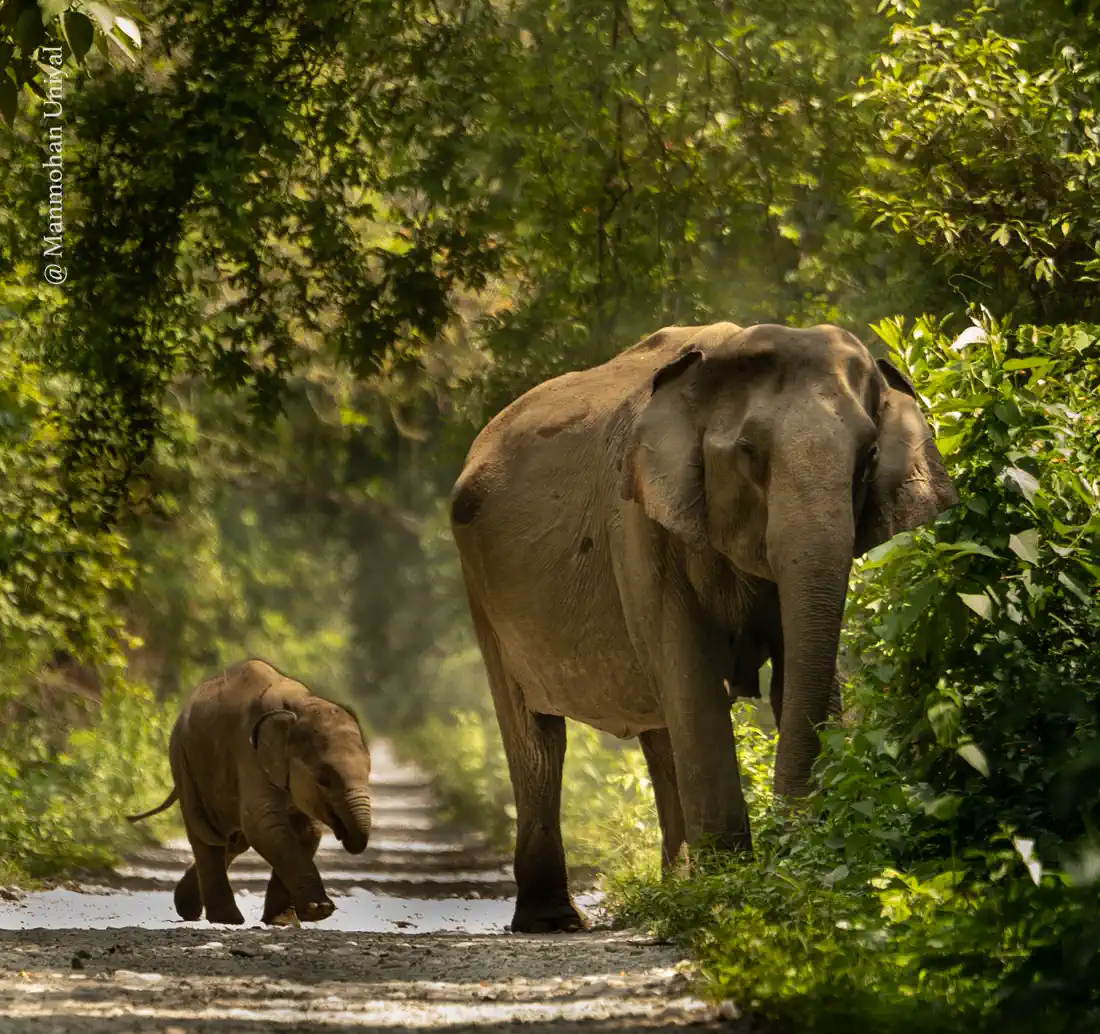
ASIAN ELEPHANTS
Observe wild Asian elephants moving through sal forests, grasslands and riverbeds.

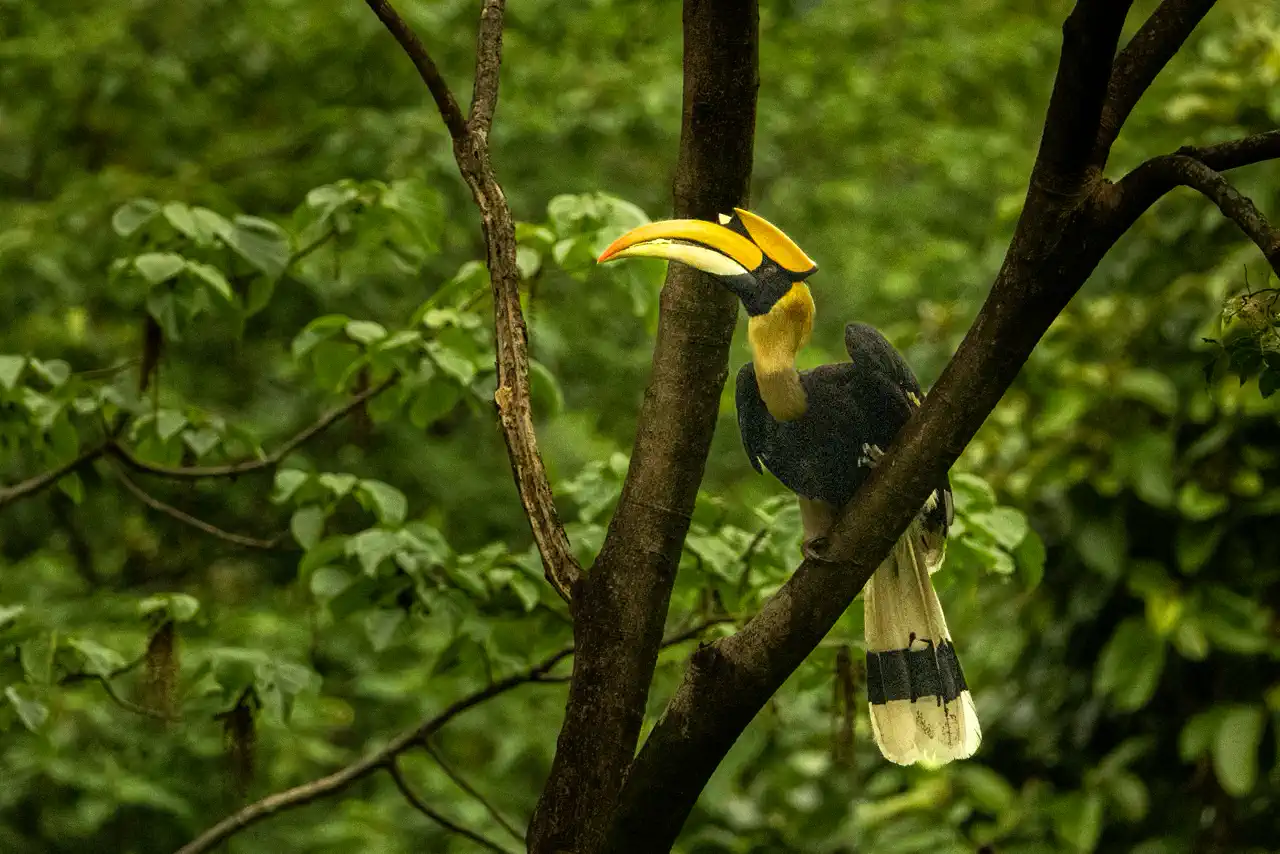
BIRDLIFE
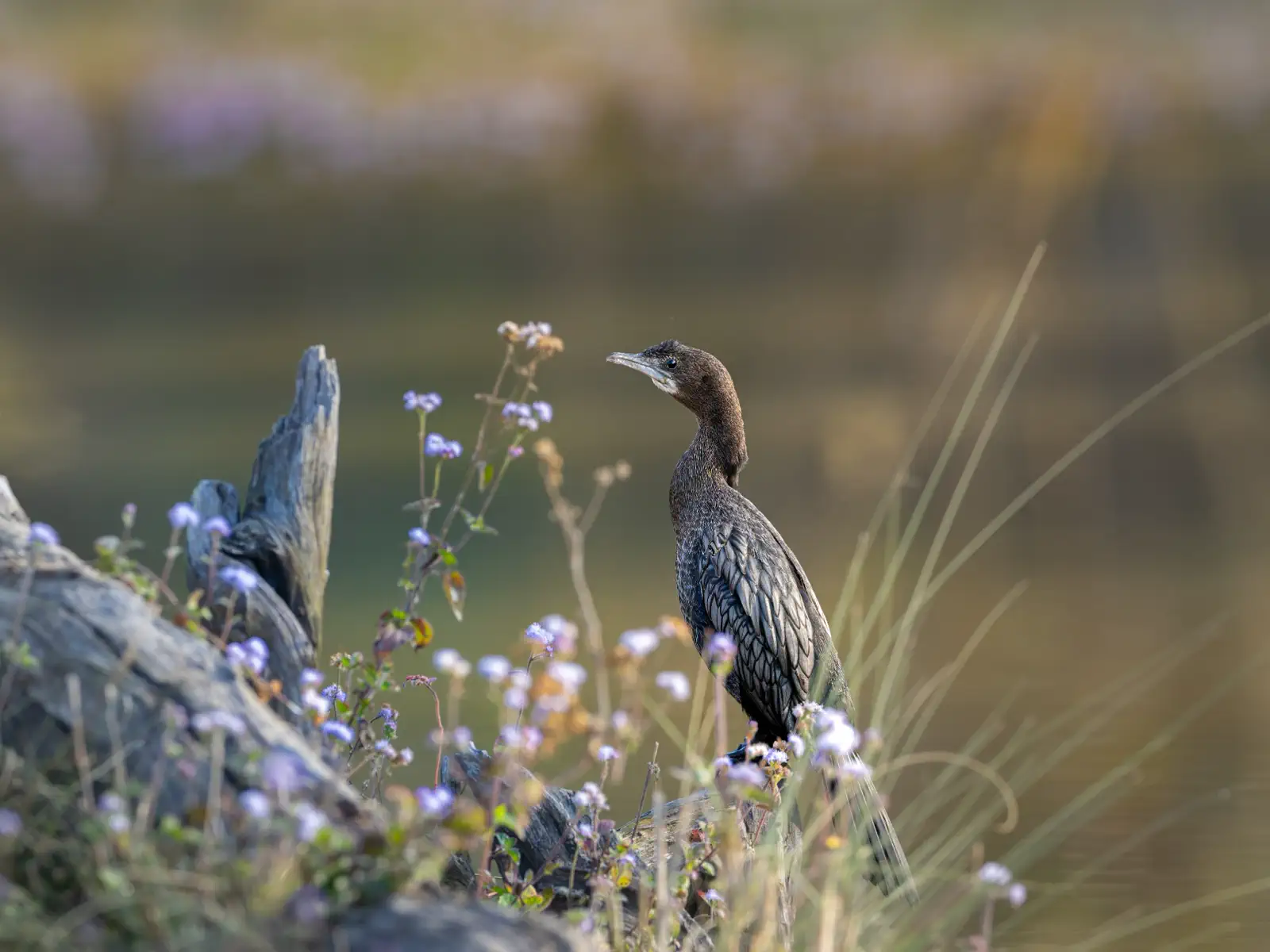
Discover 300+ bird species, including hornbills, raptors, and woodpeckers.

OTHER WILDLIFE
Look for spotted deer, sambar, barking deer, wild boar, goral and langurs.
RAJAJI THROUGH THE SEASONS
15 – 30 NOV
The park reopens in mid-November with pleasant safari weather.
DEC – FEB
Cool mornings, clear skies and soft light enhance each safari.
MAR – APR
Warmer days improve sightings near tracks and busy waterholes.
MAY – JUN
Hot, dry days draw elephants and other wildlife towards water.

Fixed group departure and private safaris
Choose How You Want To Visit Rajaji National Park
Join a fixed-departure group tour with like-minded wildlife enthusiasts, or plan a private Rajaji National Park touraround your dates and interests. Every journey is designed for travellers who want to understand and experience Rajaji beyond individual wildlife sightings.
FIXED GROUP DEPARTURE
3 Nights / 4 Days
₹27,000 per person + 5% GST
Twin-sharing basis
Twin-sharing basis
- Dehradun Pickup and Drop
- 6 Jeep Safaris included
- Stay, meals, transfers included
UPCOMING DEPARTURES
- 20–23 November 2026
- 18–21 December 2026
- 15–18 January 2027
PRIVATE RAJAJI TOUR
Custom Dates
Price on Request
Twin-sharing basis
Twin-sharing basis
- Dehradun Pickup and Drop
- Safari plan based on duration
- Choice of economical, premium or luxury stay
IDEAL FOR
- Couples and families
- Flexible travel dates
- Private wildlife holidays
EXTENDED PRIVATE TOUR
4 Nights / 5 Days
Price on Request
Twin-sharing basis
Twin-sharing basis
- Dehradun Pickup and Drop
- Safari plan based on plan
- Stay, meals, transfers included
IDEAL FOR
- Wildlife photographers
- Families and friends
- In-depth wildlife holidays
 Trusted by 1,000+ Wildlife Travellers | 4.9/5 Rating on Google ⭐⭐⭐⭐⭐
EXPLORE BEYOND RAJAJI
GUEST REVIEWS
PLAN YOUR RAJAJI SAFARI
How do I reach Rajaji National Park?
By Air
Dehradun Airport is approximately 20–50 km from Rajaji’s main safari ranges, with a drive of around 45 minutes to 1.5 hours depending on your lodge and safari gate.
Dehradun Airport is approximately 20–50 km from Rajaji’s main safari ranges, with a drive of around 45 minutes to 1.5 hours depending on your lodge and safari gate.
By Train
Dehradun, Haridwar and Rishikesh are the most convenient railway stations. The best station depends on whether your safari is planned through Mohand, Motichur or Chilla.
Dehradun, Haridwar and Rishikesh are the most convenient railway stations. The best station depends on whether your safari is planned through Mohand, Motichur or Chilla.
By Road
Rajaji is easily accessible from Delhi via the Delhi–Dehradun Expressway. Final travel time depends on your accommodation, traffic and selected safari range.
Rajaji is easily accessible from Delhi via the Delhi–Dehradun Expressway. Final travel time depends on your accommodation, traffic and selected safari range.

When is the best time to visit Rajaji National Park?
The regular safari season typically runs from 15 November to 15 June, subject to weather and Forest Department notifications. The best time to visit Rajaji depends on whether your priority is pleasant weather, birdlife or wildlife photography.
Cool Season (Nov – Feb)Cool mornings and comfortable safaris,
ideal for birdlife, landscapes and families.
Summer (Mar – Mid-Jun)
Hot and dry conditions improve visibility,
especially around tracks and water sources.
Hot and dry conditions improve visibility,
especially around tracks and water sources.
Closed Season (Mid-Jun – Mid-Nov)
The main safari ranges normally remain closed
during the monsoon and early post-monsoon period.
The main safari ranges normally remain closed
during the monsoon and early post-monsoon period.

Where should you stay in Rajaji National Park?
Economical
Clean homestays and practical stays for travellers prioritising safaris and value.
Clean homestays and practical stays for travellers prioritising safaris and value.
Premium
Comfortable nature stays offering good service, peaceful surroundings and convenient safari access.
Comfortable nature stays offering good service, peaceful surroundings and convenient safari access.
Luxury
High-end resorts are available closer to Dehradun and Rishikesh, but may involve longer safari transfers.
High-end resorts are available closer to Dehradun and Rishikesh, but may involve longer safari transfers.

What can you photograph in Rajaji National Park?
Leopard Photography
Rewarding opportunities to track and photograph leopards in wild Shivalik habitats.
Rewarding opportunities to track and photograph leopards in wild Shivalik habitats.
Bird Photography
More than 300 bird species across forest, grassland and riverine habitats.
More than 300 bird species across forest, grassland and riverine habitats.
Wildlife Photography
Asian elephants, spotted deer, sambar, goral, wild boar and other wildlife.
Asian elephants, spotted deer, sambar, goral, wild boar and other wildlife.
Landscape Photography
Sal forests, rugged hills, grasslands, riverbeds and seasonal landscapes.
Sal forests, rugged hills, grasslands, riverbeds and seasonal landscapes.

What can you explore near Rajaji?
Extend your Rajaji National Park safari to explore the cultural and riverside experiences of Rishikesh and Haridwar, or travel into the mountains for the forests and landscapes of Kanatal. Birdwatchers and nature enthusiasts can continue to Sattal or Mandal–Chopta for Himalayan birding, forest walks, trekking and a completely different range of wildlife and habitats.
 Travel times are approximate and may vary depending on road conditions and route.
RECENT TRIP REPORTS


MOMENTS CAPTURED IN RAJAJI NATIONAL PARK
- All
- Gallery Filter


FREQUENTLY ASKED QUESTIONS
Yes. Rajaji offers an excellent overall safari experience, particularly for travellers who want a wildlife destination that is easy to reach from Delhi, Dehradun, Haridwar or Rishikesh. Its principal attractions include leopards, Asian elephants, diverse birdlife and beautiful Shivalik forests. It is particularly suitable for wildlife photographers, families and travellers planning a shorter safari holiday.
Rajaji supports leopards, Asian elephants, spotted deer, sambar, barking deer, wild boar, goral, langurs and several smaller mammals. More than 300 bird species have been recorded across the wider landscape. Notable birds include Great Hornbill, Oriental Pied Hornbill, Indian Grey Hornbill, raptors, woodpeckers and owls. Recent regional observations can be explored through eBird records for Uttarakhand.
Rajaji is one of North India’s most rewarding destinations for observing and photographing wild leopards. The Mohand–Chillawali landscape is particularly well known for leopard-focused safaris. However, leopards are elusive wild animals, and sightings can never be guaranteed. Multiple safaris with an experienced guide provide better opportunities.
The best safari range depends on your interests. Mohand is particularly rewarding for leopard safaris, while Motichur offers excellent opportunities for Asian elephants. Chilla combines sal forests, riverine habitats, elephants and rich birdlife. Visiting more than one range provides a broader understanding of Rajaji’s wildlife and landscapes.
Neither is universally better because they provide different safari experiences. Jim Corbett is generally stronger for travellers primarily interested in tiger safaris. Rajaji is better known for leopard opportunities, Asian elephants, hornbills and easy access from Delhi and Dehradun. Both destinations have excellent birdlife and varied Himalayan foothill habitats.
The 2022 assessment reported approximately 54 tigers in Rajaji Tiger Reserve. Population figures can change between monitoring cycles as tigers disperse, reproduce or move through connected forest landscapes. Rajaji should not be chosen primarily for tiger sightings because encounters are less predictable than in established tiger-tourism destinations such as Corbett. Current assessments can be checked through the National Tiger Conservation Authority reports.
The main safari season runs from 15 November to 15 June. November to February offers cool weather, comfortable safaris and excellent birdlife. March and April bring warmer conditions and improving wildlife visibility. May to mid-June is hot and dry, but animals may become more concentrated near water. Check current dates through the official Rajaji Tiger Reserve website before travelling.
Safari prices depend on current Forest Department charges and whether the travellers are Indian or foreign nationals. WOW provides a consolidated quotation based on your dates, number of travellers, selected accommodation and safari plan. Foreign nationals must provide valid passport details while booking. Current availability can be checked through the official Rajaji safari booking portal.
A three-night and four-day tour with six morning and evening safaris is ideal for exploring different ranges and improving opportunities for leopard sightings. A shorter two-night tour with three or four safaris can provide a good introduction. Rajaji can also be included in a longer itinerary covering other wildlife safaris in India.
No. Travellers cannot stay inside Rajaji National Park. Accommodation is available outside the park near the safari ranges, with options ranging from clean homestays to comfortable nature stays. Luxury accommodation close to the safari gates is limited, although high-end resorts are available closer to Dehradun and Rishikesh.
Rajaji is easily accessible from Delhi using the Delhi–Dehradun Expressway, followed by a road transfer to the selected lodge and safari range. Dehradun Airport is the nearest airport, while Haridwar, Dehradun and Rishikesh are convenient railway stations. Final travel time depends on whether the safari is planned through Mohand, Motichur or Chilla.
Rishikesh and Haridwar can be added for riverside landscapes, culture and spiritual experiences. Kanatal is suitable for birding, nature and a quieter mountain stay. Sattal and Mandal–Chopta are excellent extensions for Himalayan birding, trekking and nature. These destinations can also form part of a longer birding tour in India.
Ready to Plan Your Wildlife Safari?
Tell us your dates, group size and wildlife interests, and we will help you plan the right Rajaji safari experience.